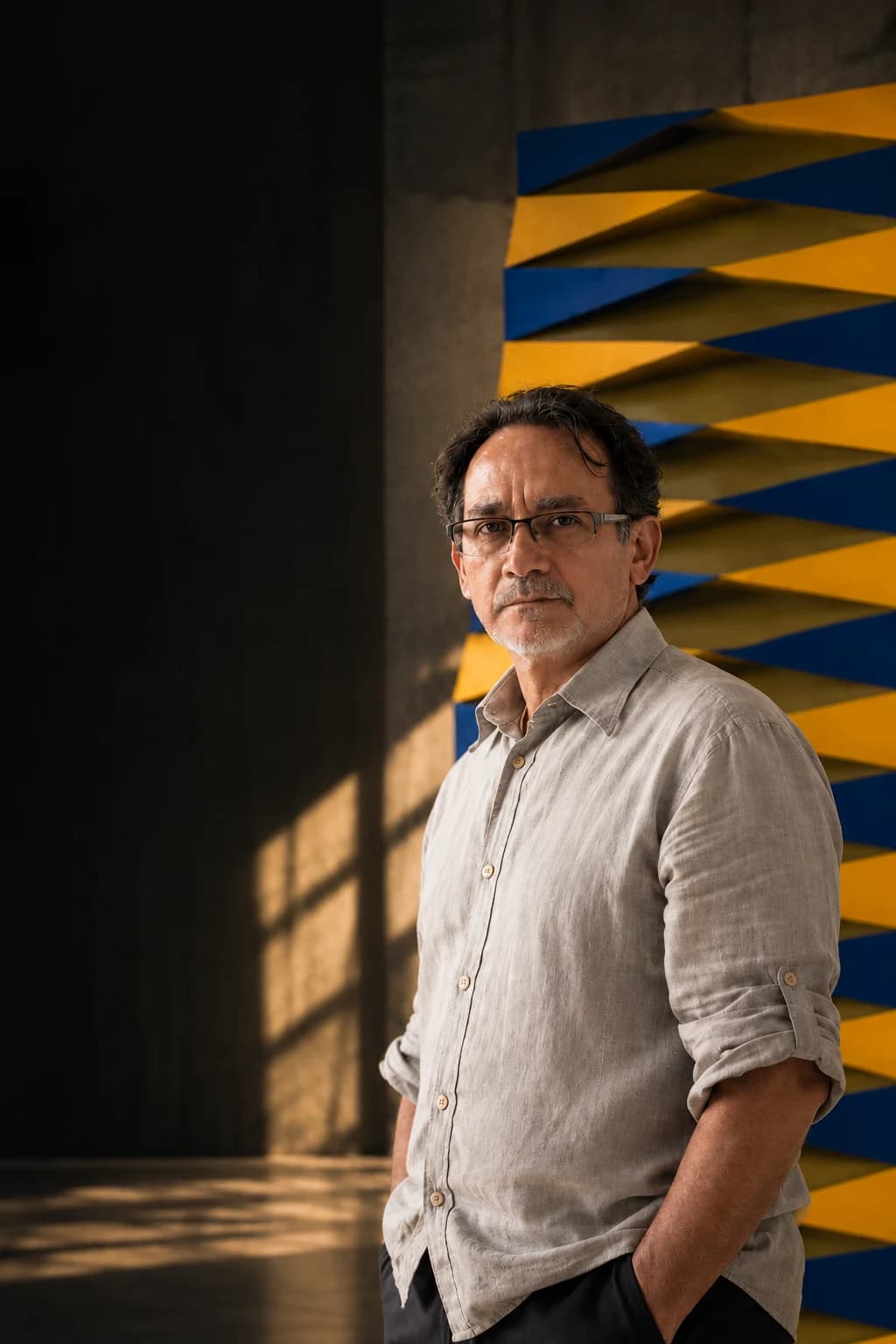
Biography
William Barbosa
Escultor / Sculptor
“One of the most prominent sculptors of our time.”
— César Segnini
- Ocaña, Colombia
- 1955
- Ocaña, Colombia
- exhibitions
- 70+
- exhibitions
- countries
- 16
- countries
01
The beginnings
1955 – 1975
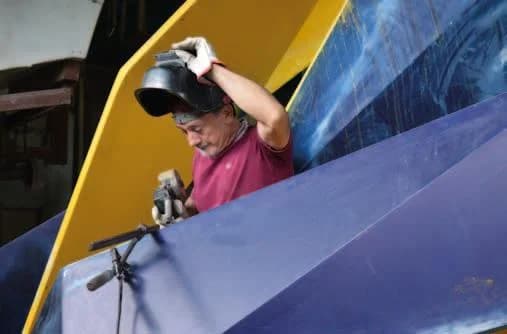
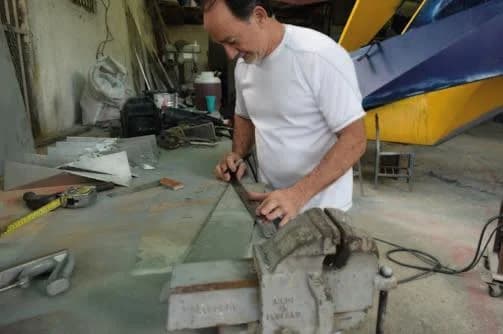
Born in Ocaña, Colombia, in 1955. Self-taught, he came to sculpture through his work in the metallurgical industry, where metal became his material and the workshop his school. To that craft he added an artistic sensibility and a perseverance that would mark all his work. In 1975 he moved to Caracas, where he became a naturalized citizen and developed most of his career.
02
A country of abstraction
The Venezuelan context
He arrived in a country where modern sculpture had paved the way: Francisco Narváez, the Los Disidentes group in Paris, the University City of Caracas that Carlos Raúl Villanueva filled with works by Arp, Vasarely, Léger and Calder, and precursors such as Soto, Otero and Cruz-Diez. After the generation of the seventies —Guinand, Barrios, Medina— Barbosa and Alberto Cavalieri gained a relevant presence in the eighties.
03
First steps
1981 – 1995
In 1981 he first exhibited at the National Salon of Young Artists of the Museum of Contemporary Art of Caracas. Salons and group shows in Caracas followed, the Alejandro Otero Biennial and the OAS Festival of the Americas in Washington (1992). In 1991 he held his first solo show, Geometría modular, then Línea, volumen y color (1993) and a show in Miami (1995). These were the years of rust-patinated steel and pieces such as Encuentro and Torsión ascendente.
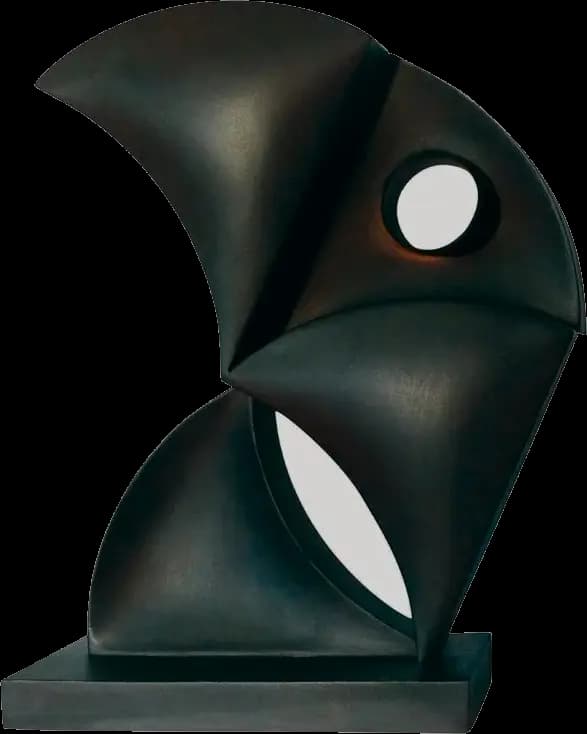 1992Sin título
 1993Encuentro
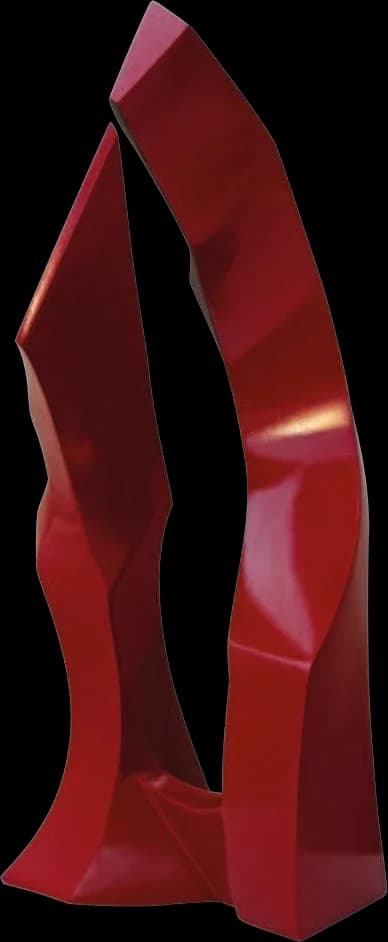
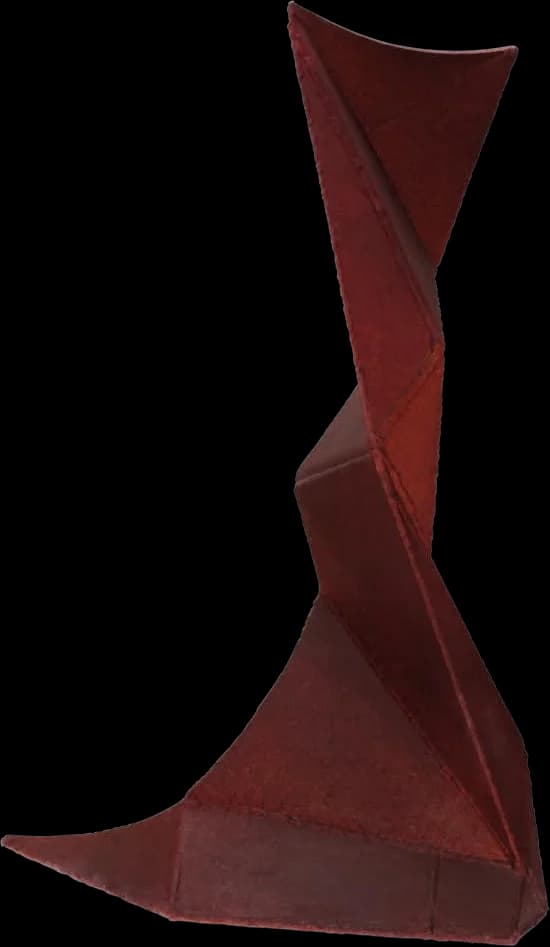 1994Torsión ascendente
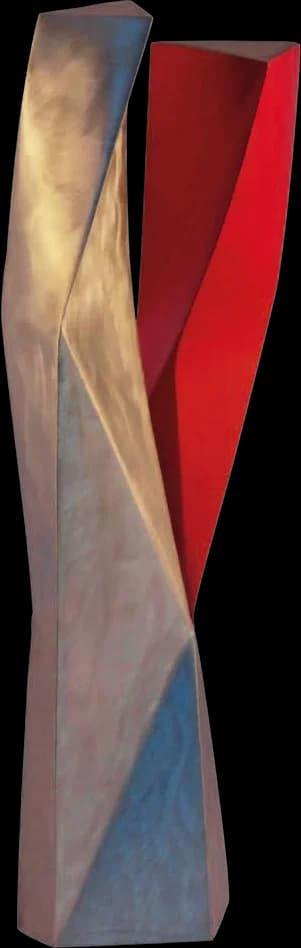 1999Sin título
04
Europe and the MADI movement
1996 – 2006
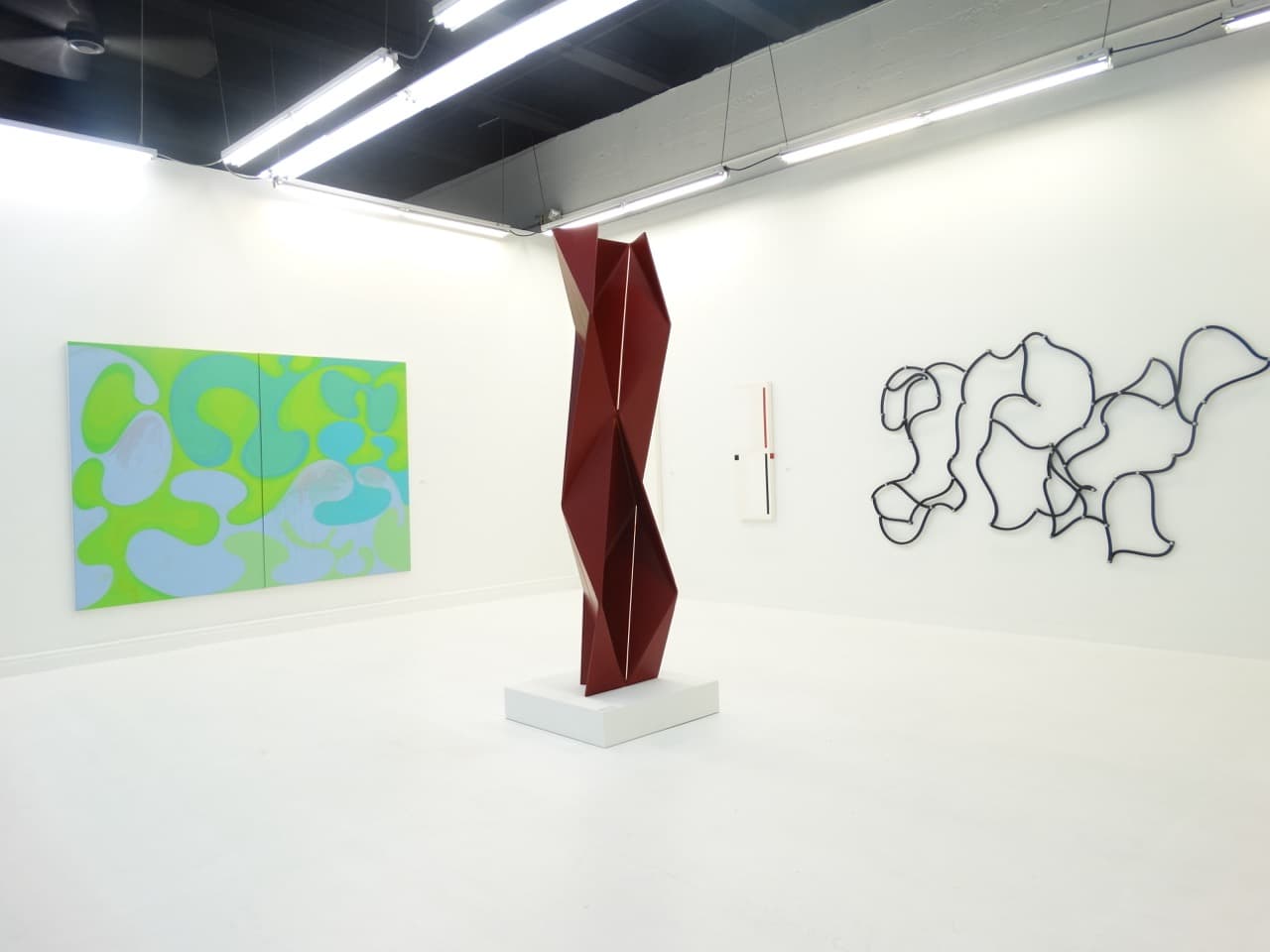
From 1996 his work crossed the Atlantic: Nice, the Salon d’Automne in Paris, Bern, Milan and Naples. In 1997 he showed Geometrismo escultórico in Paris, in 1998 he exhibited at WIPO in Geneva and began working with galleries in Switzerland and Germany. His work converses with Concrete Art, Expansionism and the MADI International movement; in 2003 it entered the permanent collection of the MADI Museum in Dallas and in 2006 it reached the Museum of Modern Art in Moscow.
05
The language of metal
Less is more
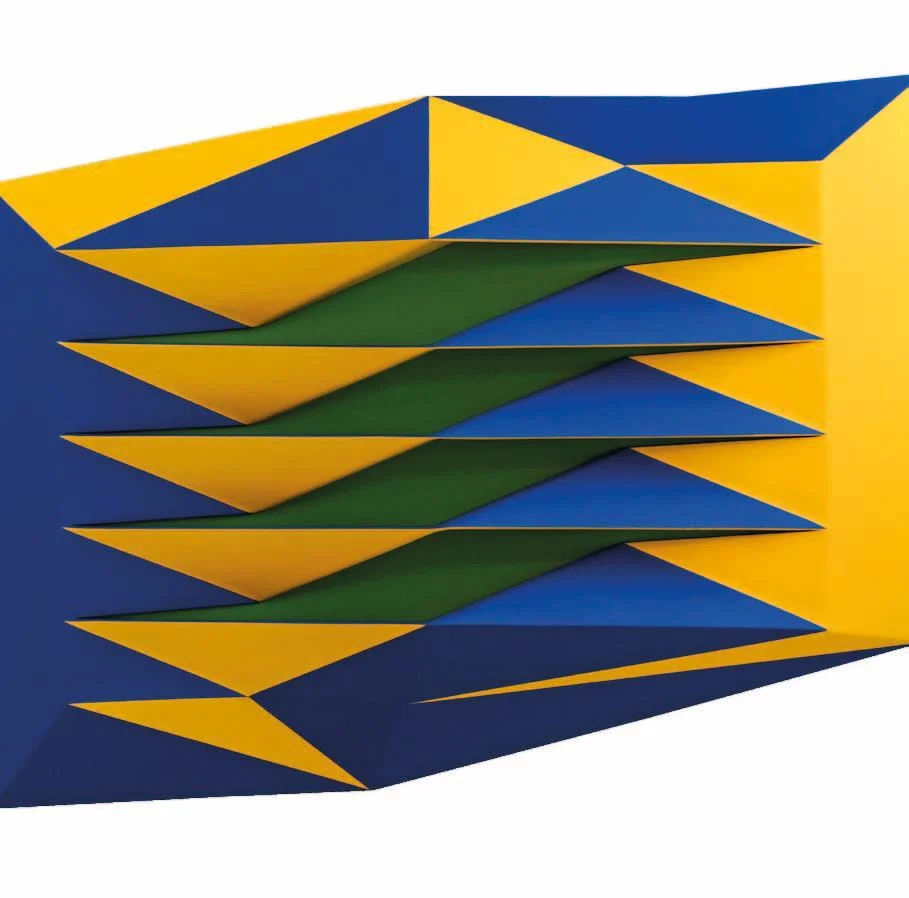
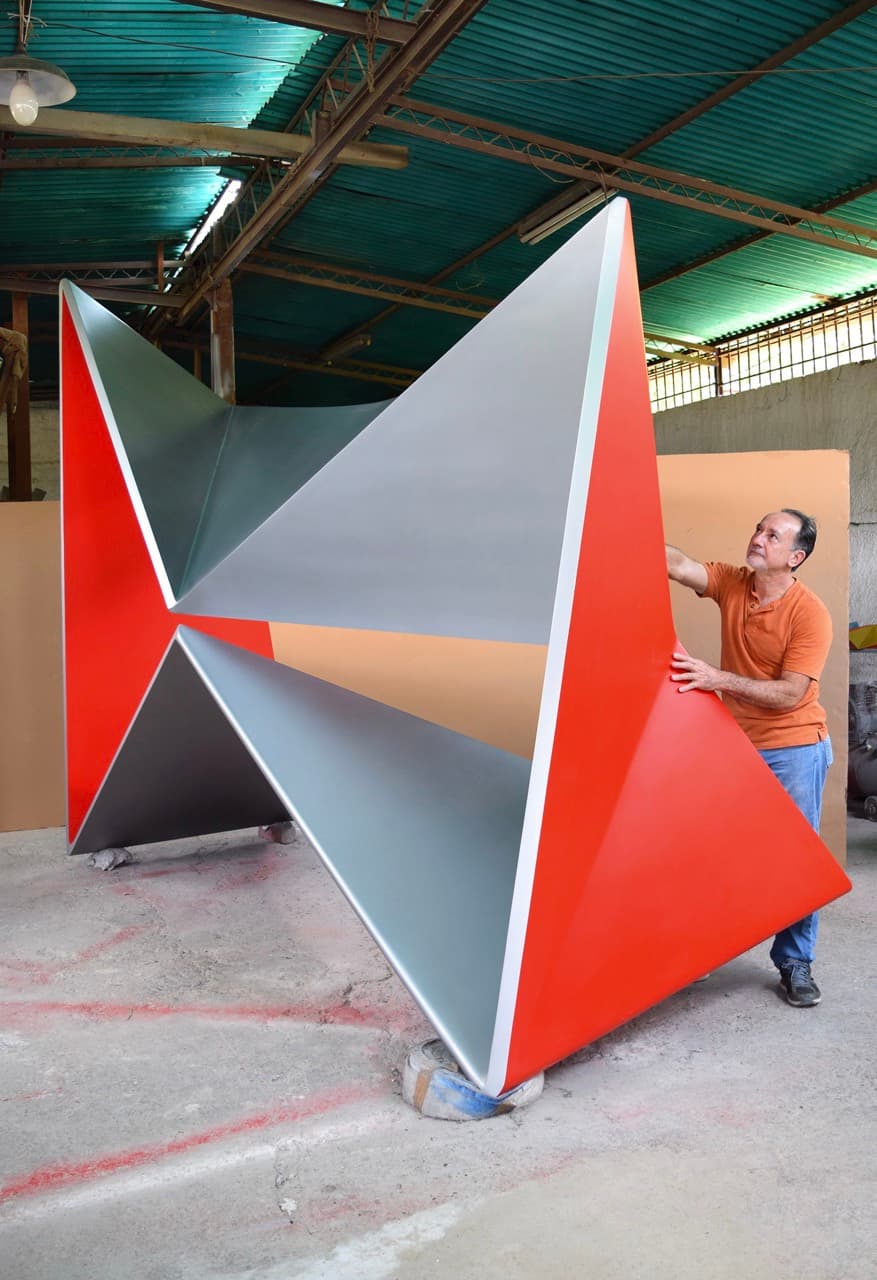
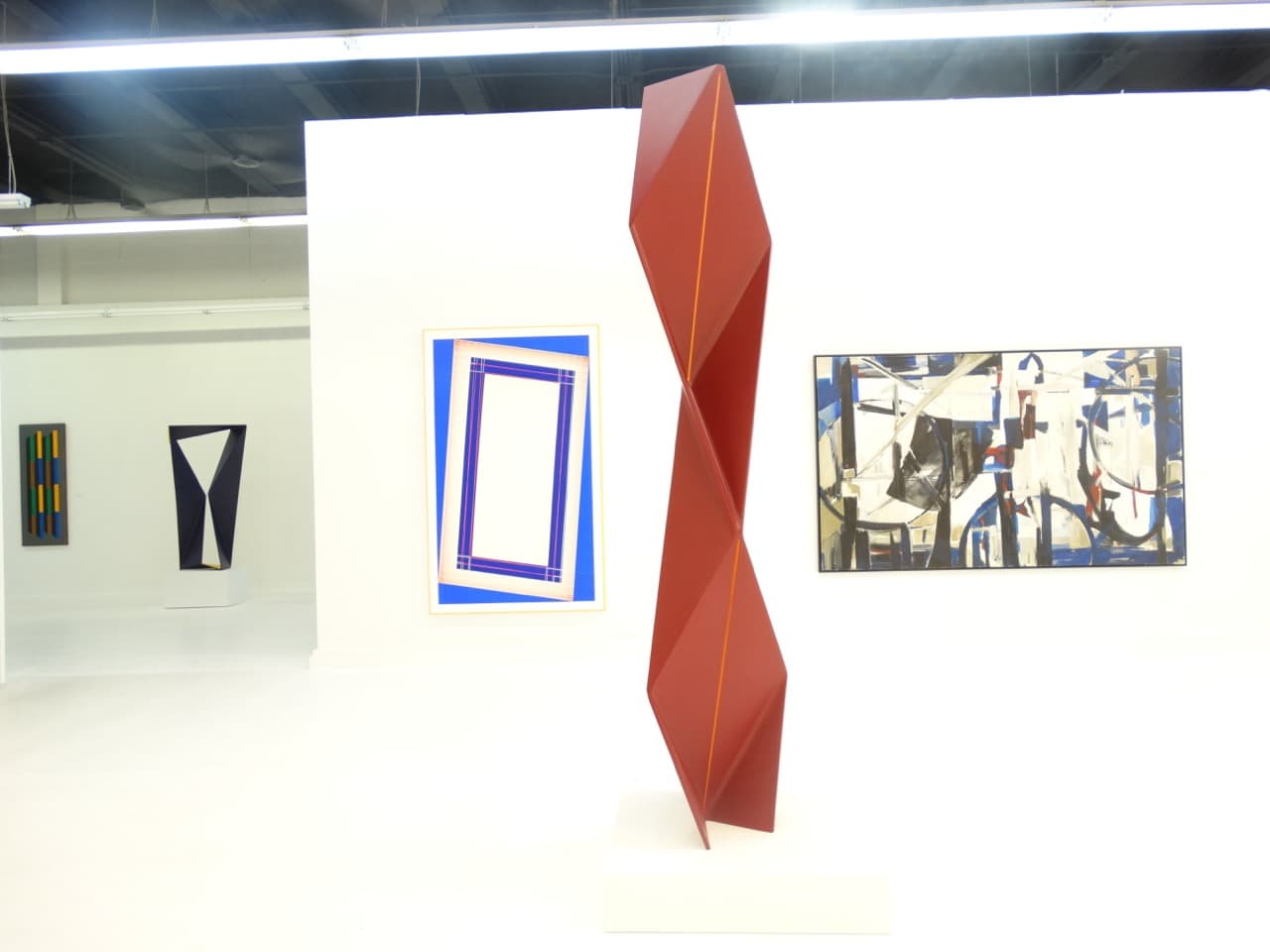
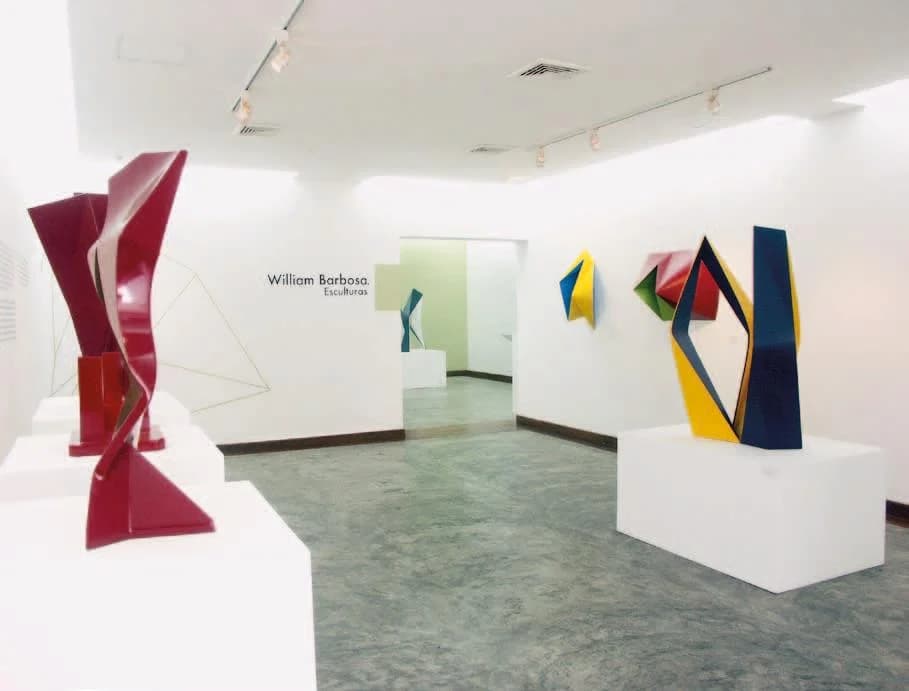
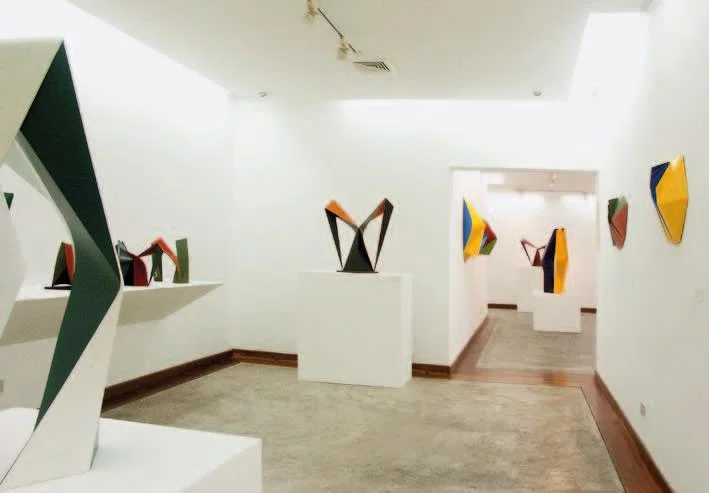
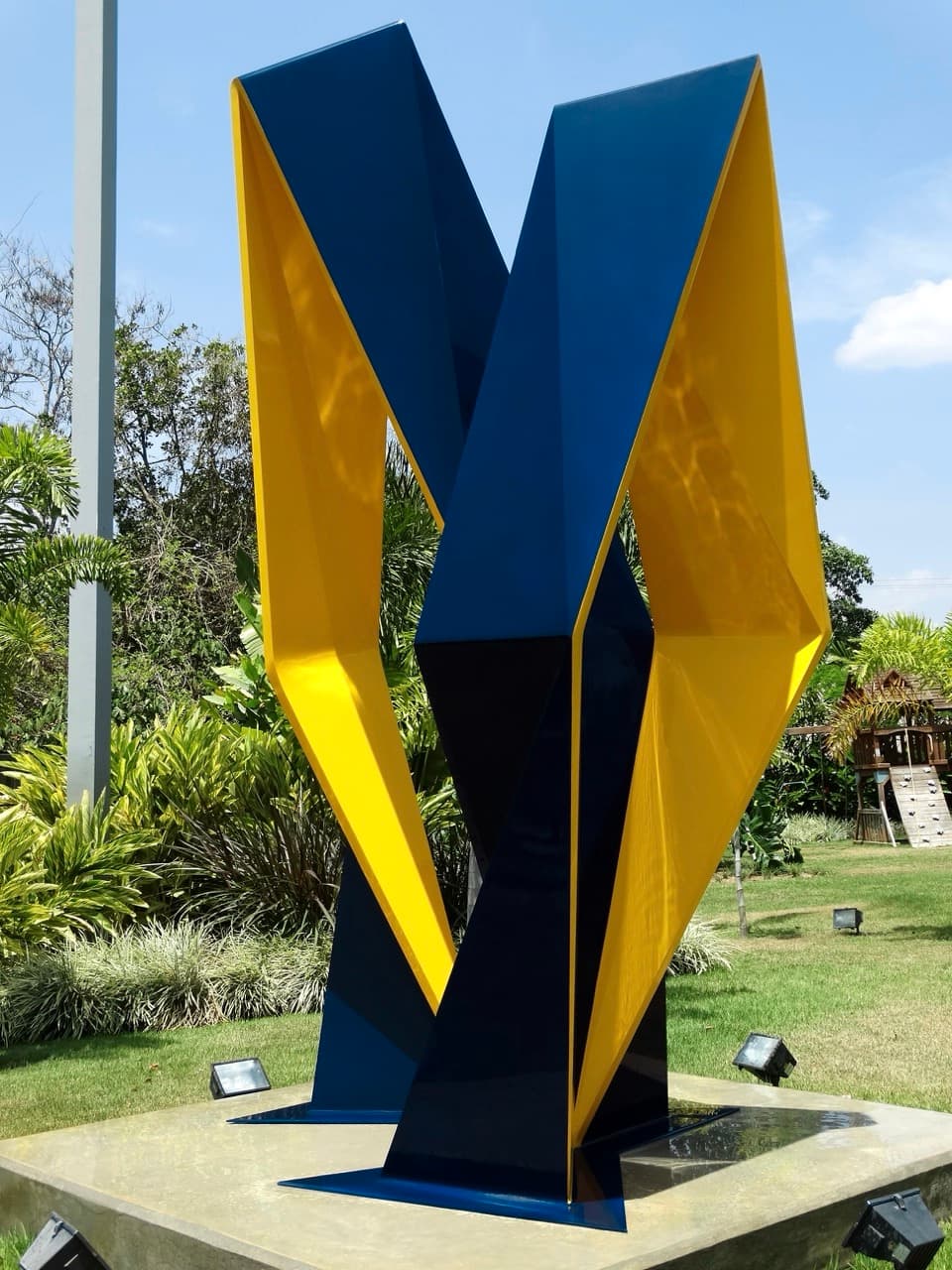
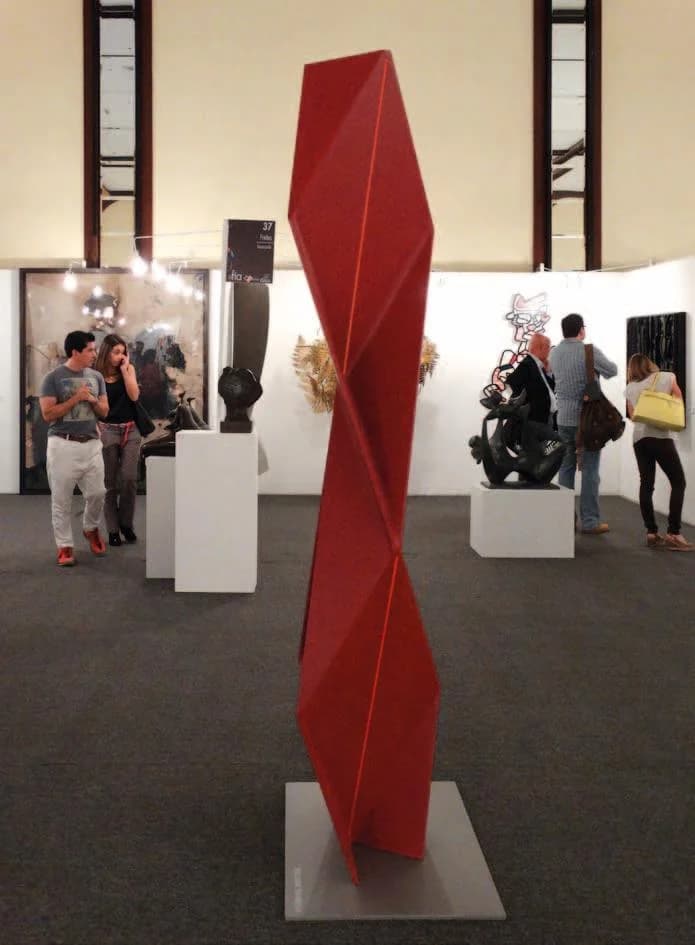
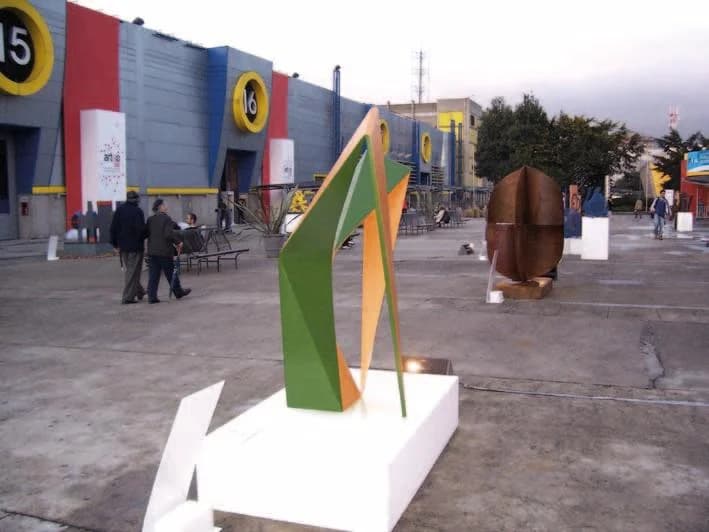
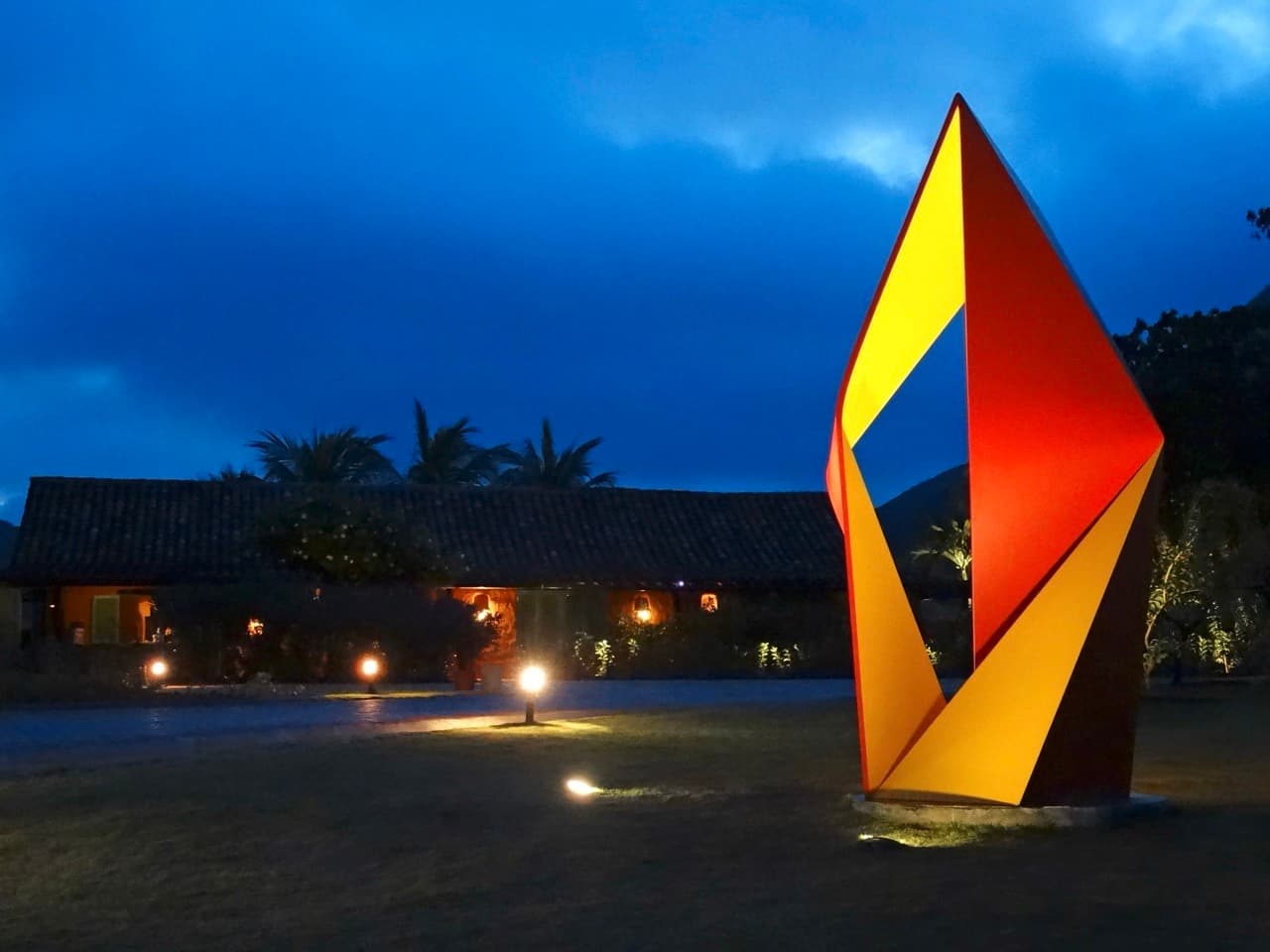
He starts from a primary geometric form —a triangle, a pentagon— that turns on one of its sides to build volumes without leaving the continuity of a single sheet. For critic Perán Erminy, his work inherits Mies van der Rohe’s “less is more”: nothing superfluous, no showiness, only planes, color, lines and voids that signify themselves. An Apollonian classicism, rational and sensitive at once.
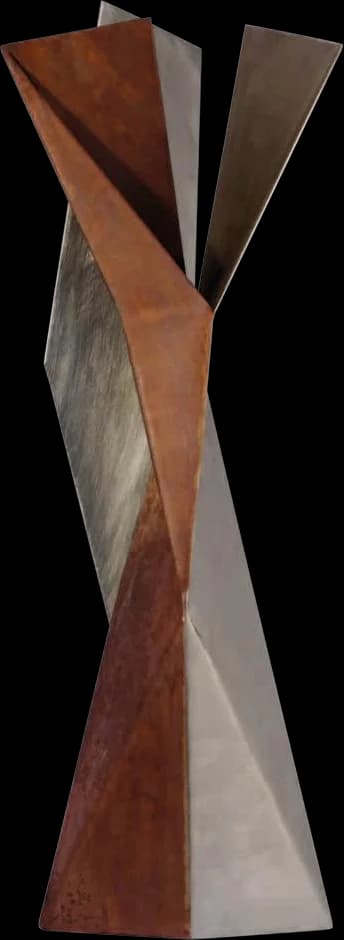 2001Despliegues
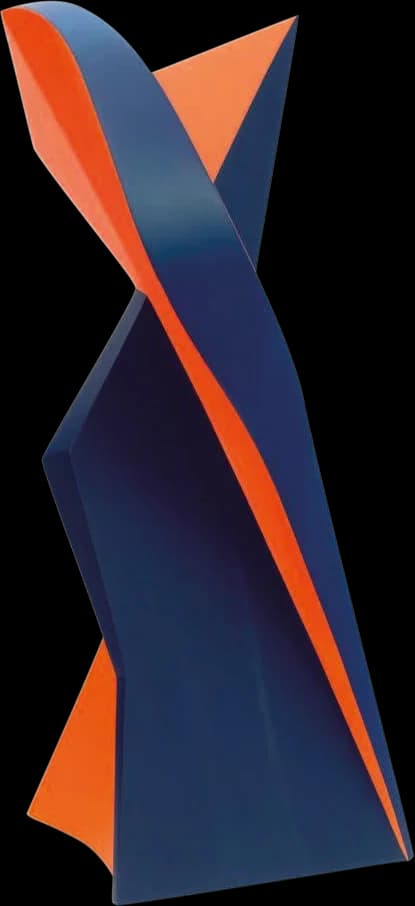 2004Sin título
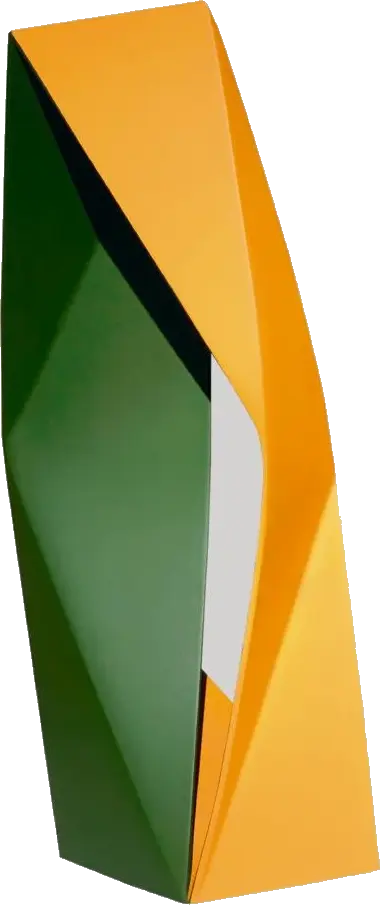 2009Tensión
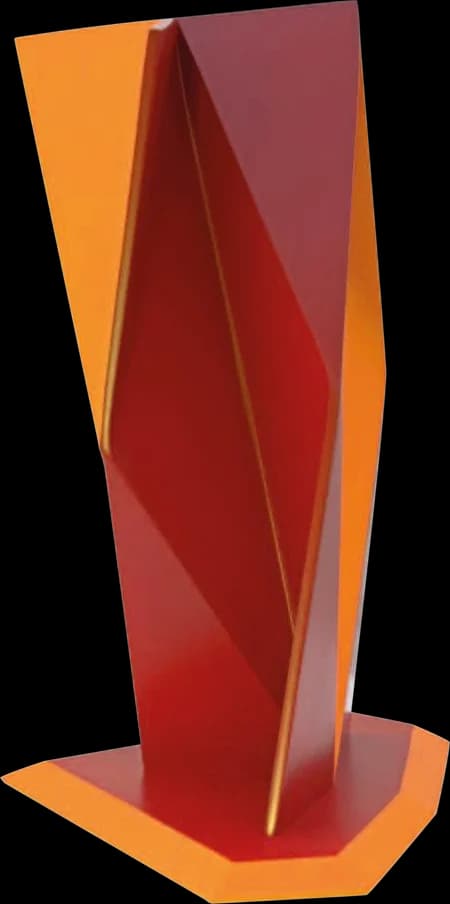 2012Volumen virtual
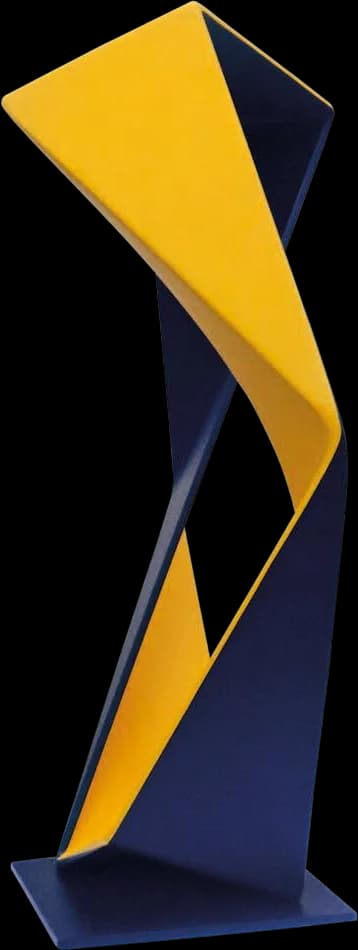 2015Banda continua
06
Art in architecture
Doors, reliefs and walls
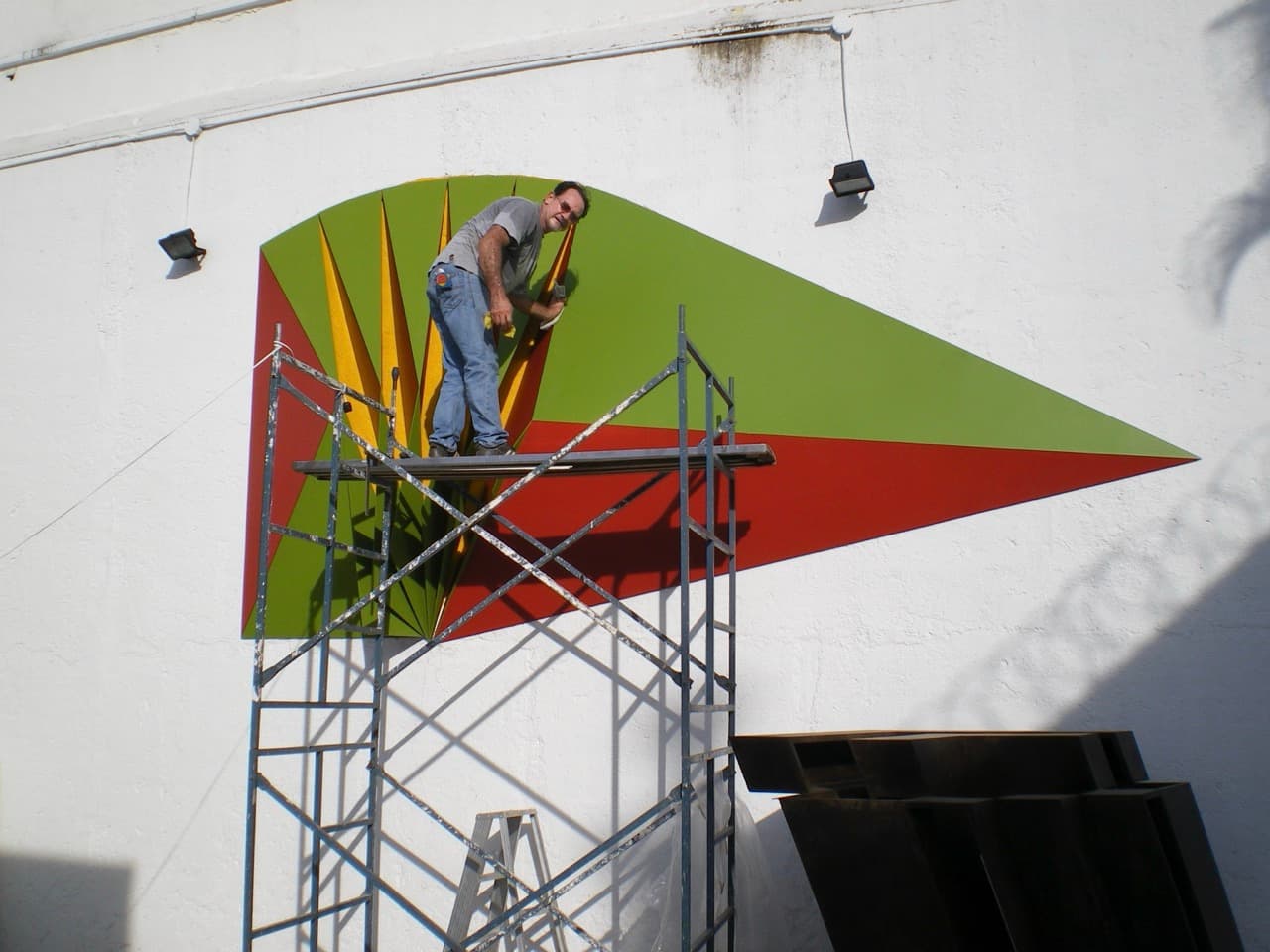
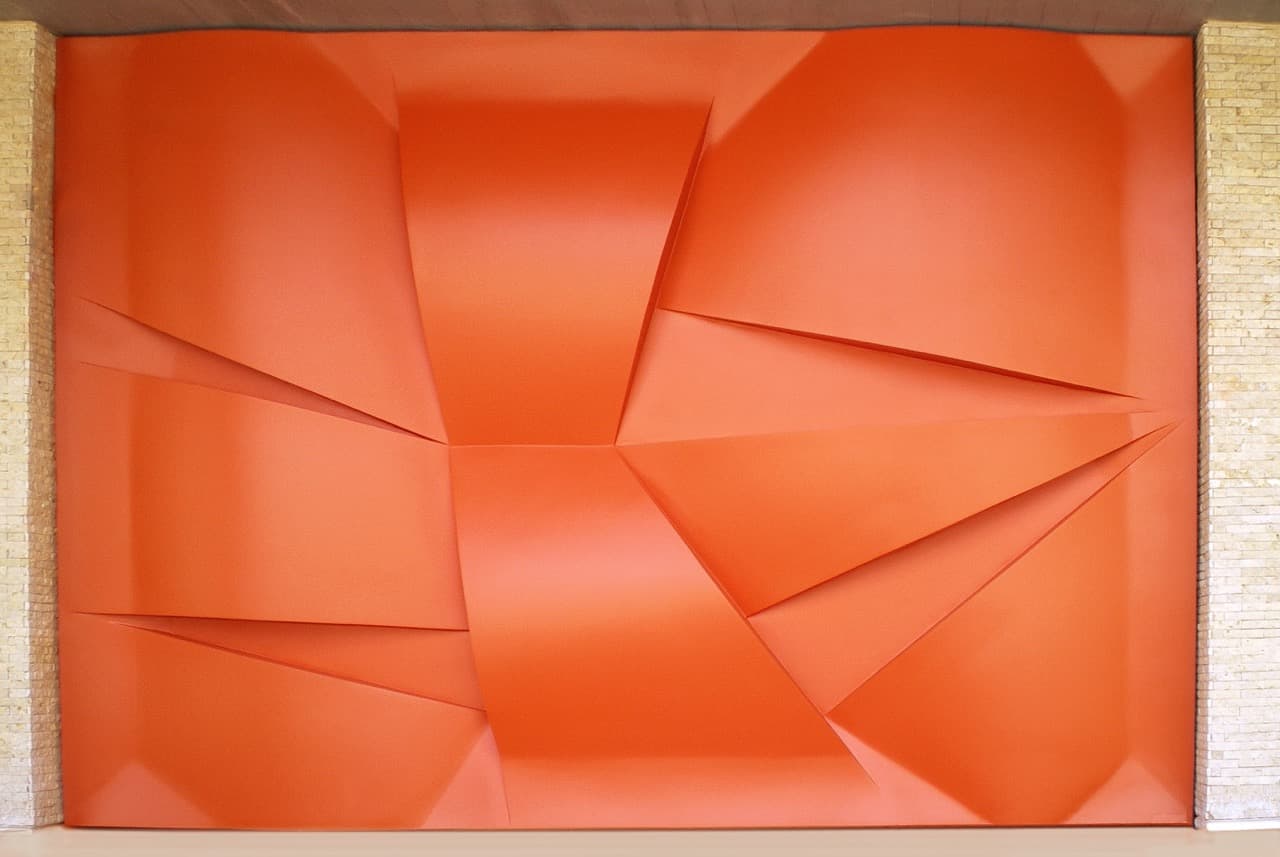
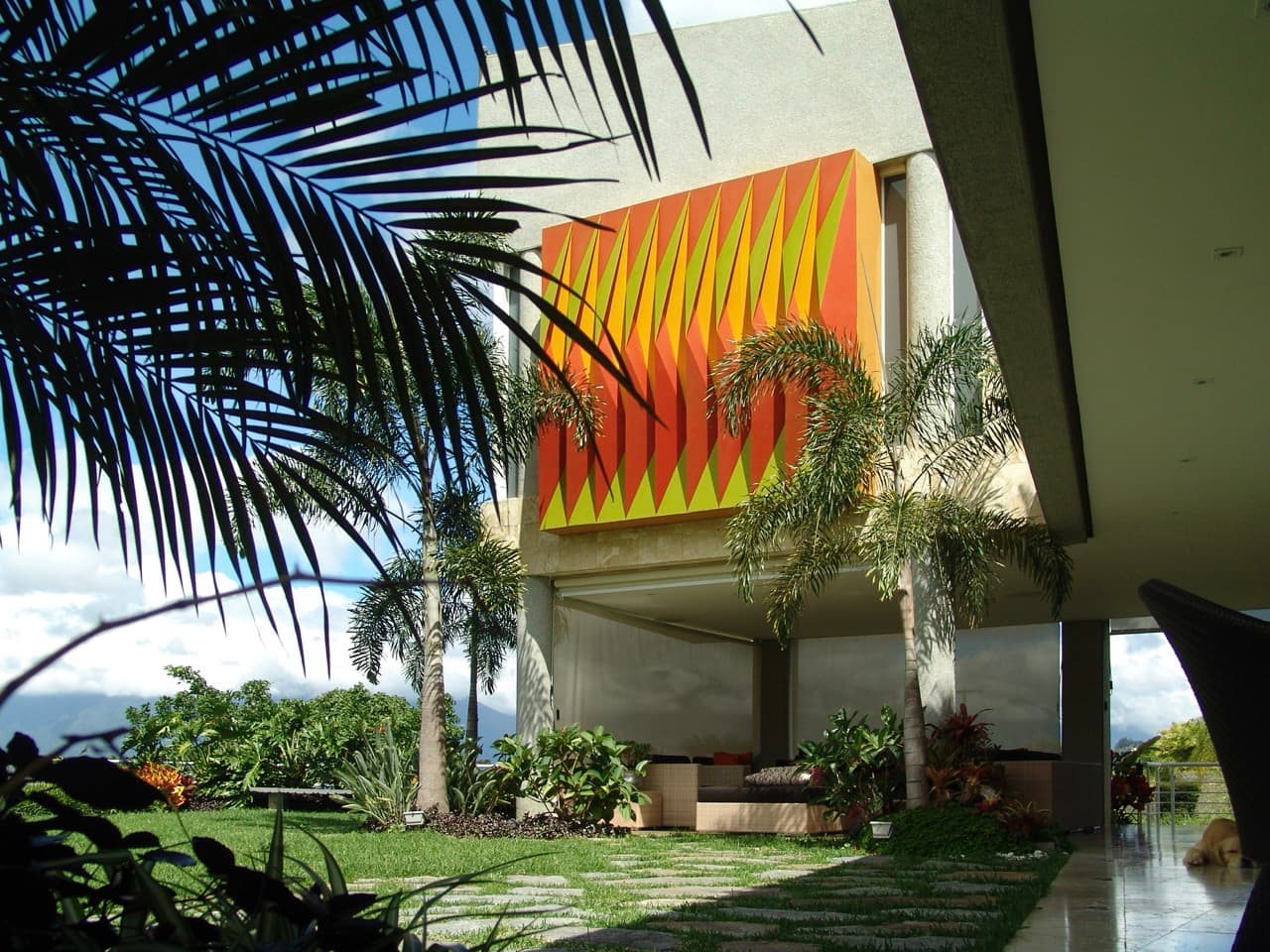
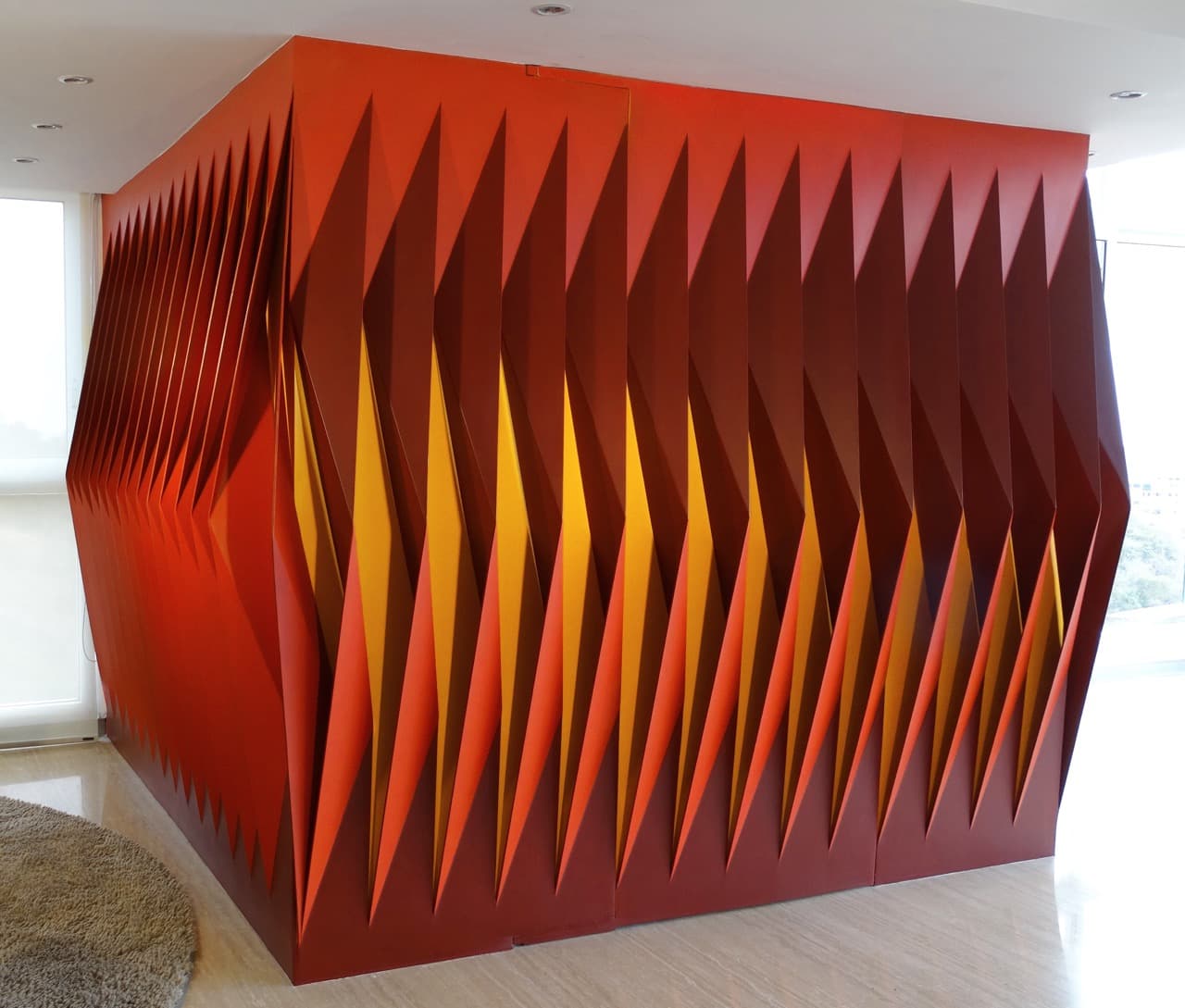
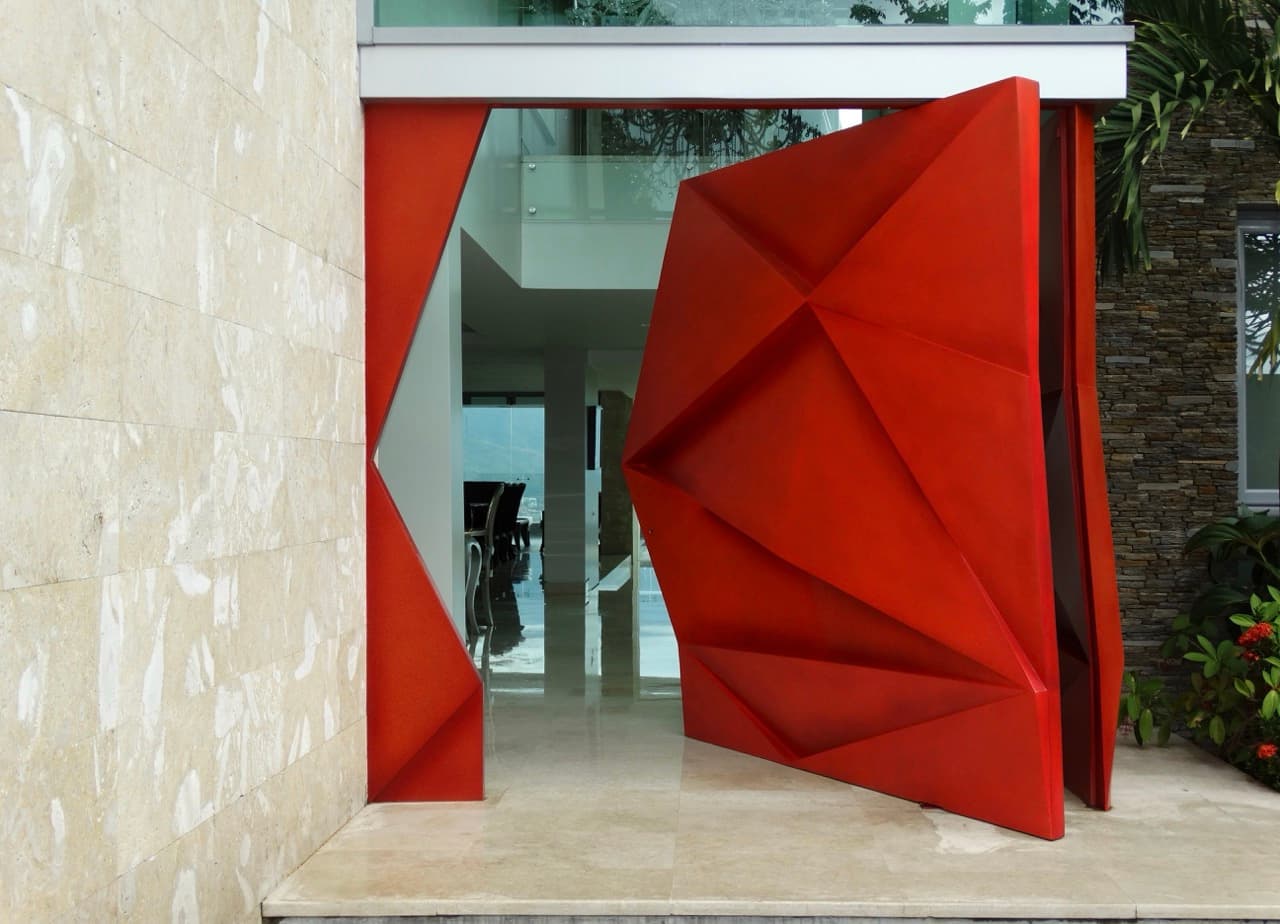
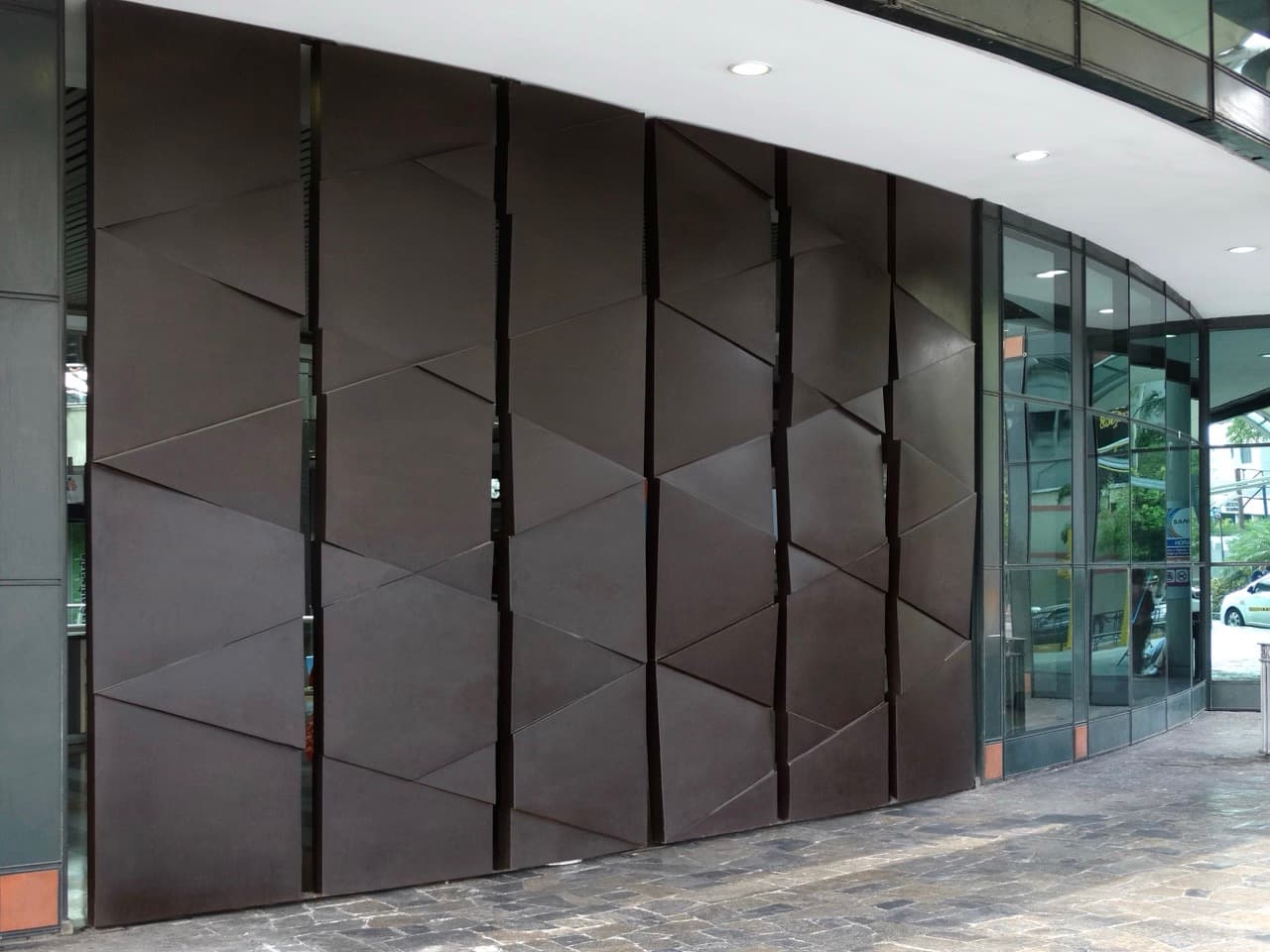
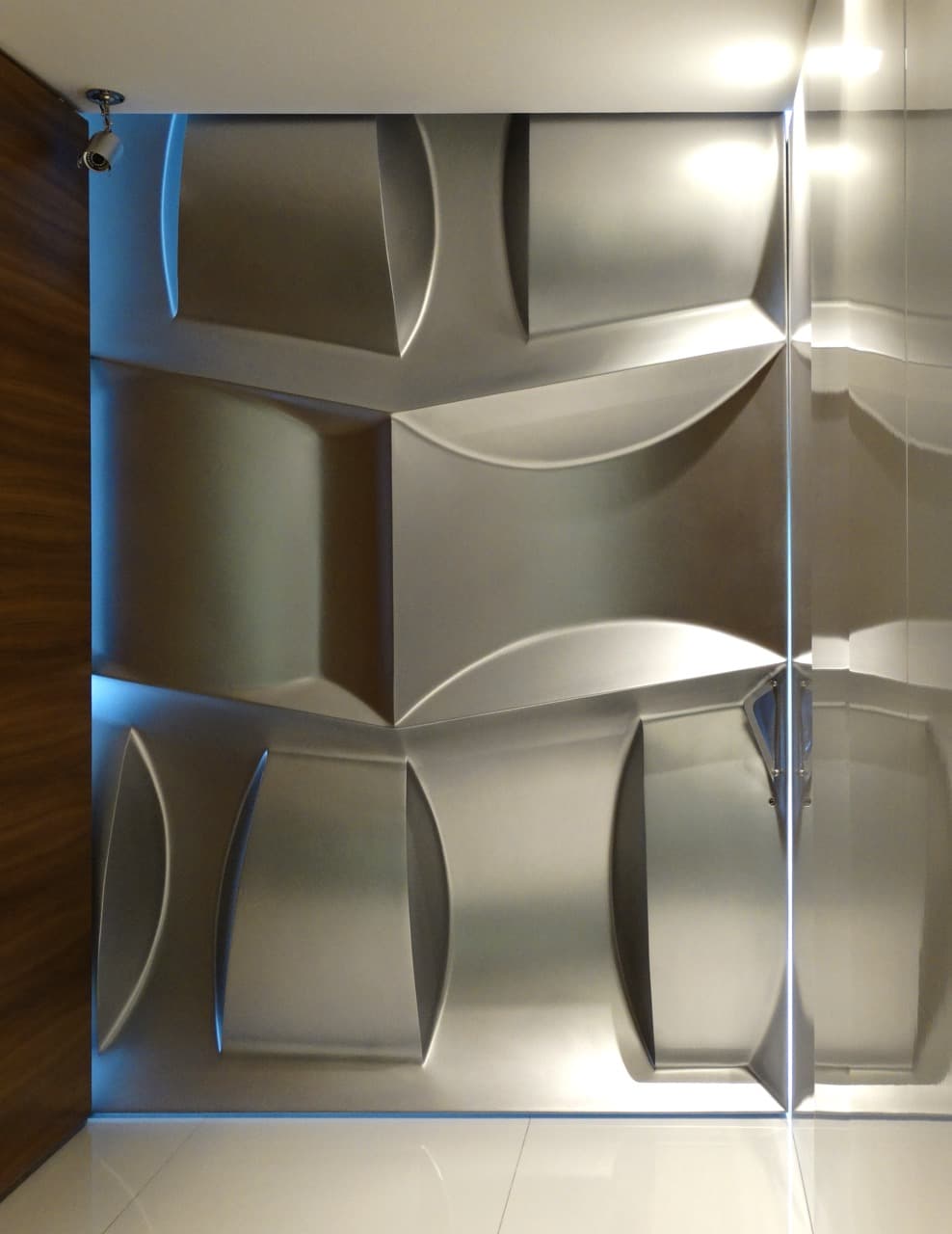
A large part of his work is integrated into architecture: reliefs, extended walls, gateways and railings. His doors for homes and shopping centers, such as Sambil (1998) and El Recreo (1999), are true sculptural enclosures; in 2002 the Carlos Cruz-Diez Museum devoted the exhibition Puertas to them. For Erminy, these functional works improve city life: their usefulness does not conflict with their nature as works of art.
07
Asia and the world
2007 – 2015
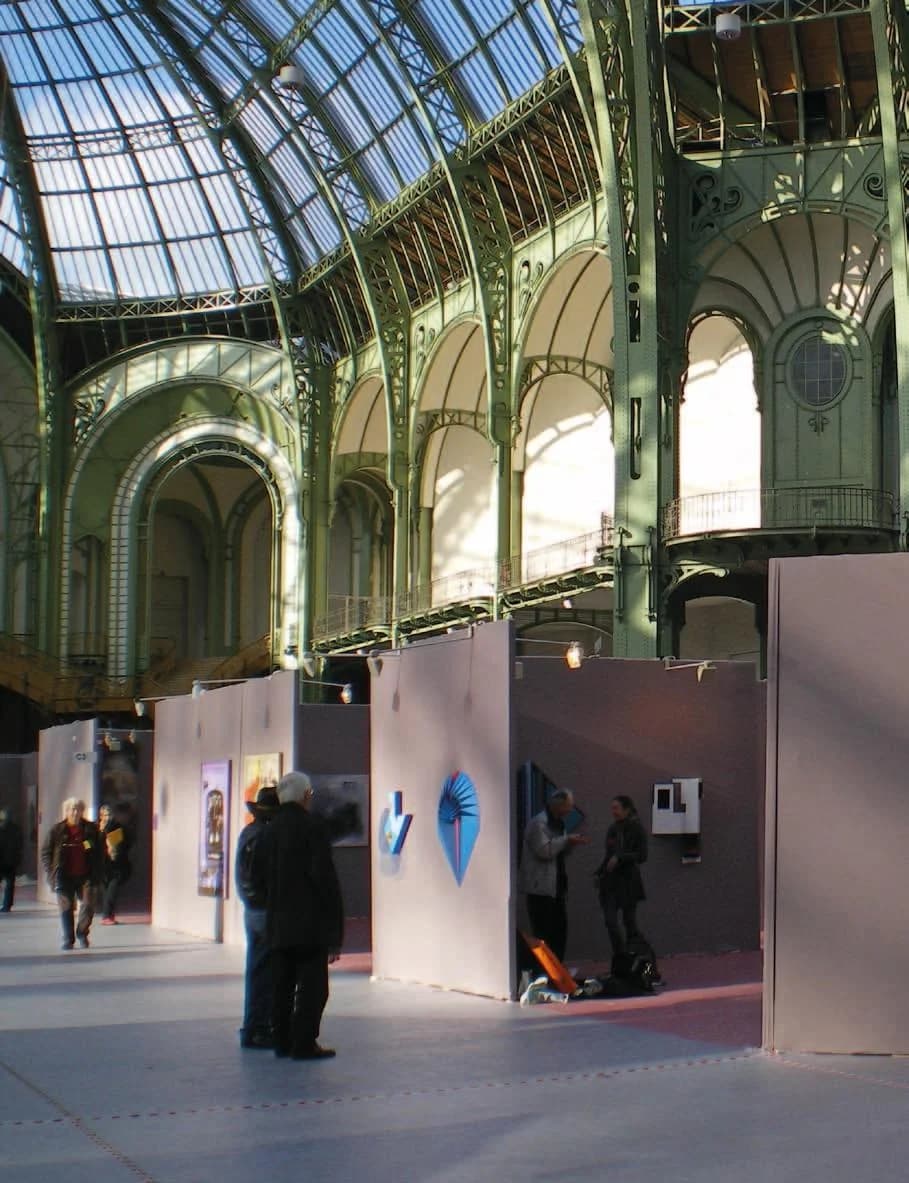
In 2007 he took part in the International Contemporary Sculpture Symposium in Yeongwol, South Korea, and exhibited at the Grand Palais in Paris. Seoul, Shanghai and Singapore followed (2008), the Youngeun Museum of Contemporary Art (2011) and Busan (2014), plus fairs in Bogotá, Miami and Barcelona. In 2014 he presented Geométrica luz. Today his work is in private collections in ten countries and in museums in Dallas, Los Angeles, La Plata, Budapest and Korea, the City of Geneva Collection and WIPO.
08
In his own words
A conversation with William Barbosa in his workshop about the purity of a sensitive geometry: the process, the material and the search behind each piece.
El Nuevo Herald · AcercArte, Miami
“The visual dynamic generated by the interplaying facets flows softly, without jolting, accelerating or stopping.”
William Barbosasculptor | escultorThe book
William Barbosa, sculptor
The monograph published in 2016 by Durban Segnini Gallery: essays by César Segnini and Perán Erminy, the catalogue of his works and his full career, in Spanish and English.
97 pages · PDF · 7.7 MB
Full career
Every exhibition recorded in the book, from 1981 to 2015.
75 exhibitions
- Salón Nacional de Jóvenes ArtistasMuseo de Arte Contemporáneo de Caracas Sofía Imber, Caracas · VenezuelaGroup
- Salón Nacional de Arte AraguaMuseo de Arte Contemporáneo de Maracay Mario Abreu, Maracay · VenezuelaGroup
- La materia, el espacio y las formasGalería Ángel Boscán, Universidad Central de Venezuela, Caracas · VenezuelaGroup
- Materia y espacioSala Cantv, Caracas · VenezuelaGroup
- Salón Nacional de Jóvenes ArtistasCasa Guipuzcoana, La Guaira · VenezuelaGroup
- Exposición SubastaUniversidad Simón Bolívar, Caracas · VenezuelaGroup
- Salón Bijoux-WisoUnión Israelita de Caracas · VenezuelaGroup
- Exposición de EsculturasGalería A., Caracas · VenezuelaGroup
- Geometría modularGalería Graphic CB2, Caracas · VenezuelaSolo
- SADI, Festival de Arte de Las AméricasOEA, Washington DC · United StatesGroup
- I Bienal de Artes Visuales Alejandro OteroMuseo Alejandro Otero, Caracas · VenezuelaGroup